

Reality Check: “Comps” vs. Scarcity, Replacement, Reality
Summary
The hobby of sports cards has many factors that determine prices. "Comps" is a discussion that comes up most frequently. There are also considerations like scarcity, the quality of a card's grade, and other reality-checks that need to be considered.
There has been a longstanding debate about pricing cards in online sales, in auctions, at card shows and via private transactions. This is where the endless “comps” needs to be considered and addressed. “Comps” have a place, but scarcity, replacement and reality all have to be equally considered. This may be targeted at graded sports cards, but it also applies to non-sports cards, TCG cards, tickets/autographs, and perhaps any other type of collectible for buyers and sellers alike.
Please be advised that this is coming from someone who is both a card dealer and who has been a long time collector. This is also not intended to be a universal case. It generally pertains to cards that are more scarce than the many modern cards out there with 30,000 to 50,000 graded examples that have trackable sales multiple times per week (or even every day).
This discussion also does not directly pertain to modern 1-of-1 and 1-of-5 cards, or other unique parallels. Those are in a market of their own. Even using a sophisticated AI analysis based on 20 “relative” cards of the same player or similar players simply may not matter.
Do would-be buyers understand that if they participated in auction that they would not have likely won that same card at that same price? Many buyers see that they lost an auction by only $25 or $50 under the final winning bid. If you made the same bid as the winner, before the other bidder, there is no guarantee that the competing bidder would not have raised their price. There is also no way to know what their highest bid cut-off actually was in that auction.
The reality is that the “comps” game is a very loose guide in many cards beyond just scarce cards. Yes, the prices are relative and most of us in the hobby have to consider “comps” as a starting reference point in deciding what prices are to be used for buying, selling and even trading. The other reality is that those “comps” simply may not matter today, next week, next month or even next year. And buyers and sellers alike have to come to the admission and realization that prices of even scarce grail cards do not have to rise in perpetuity.
HOW SCARCE IS A CARD?
First and foremost, population reports from the likes of PSA, SGC and Beckett do not consider how many cards have been cross-graded. Grading companies are supposed to eliminate cards that have been broken out of slabs. The reality is that they often do not know if they are grading a true raw card or one that has already been graded elsewhere or even at their own grading outfit.
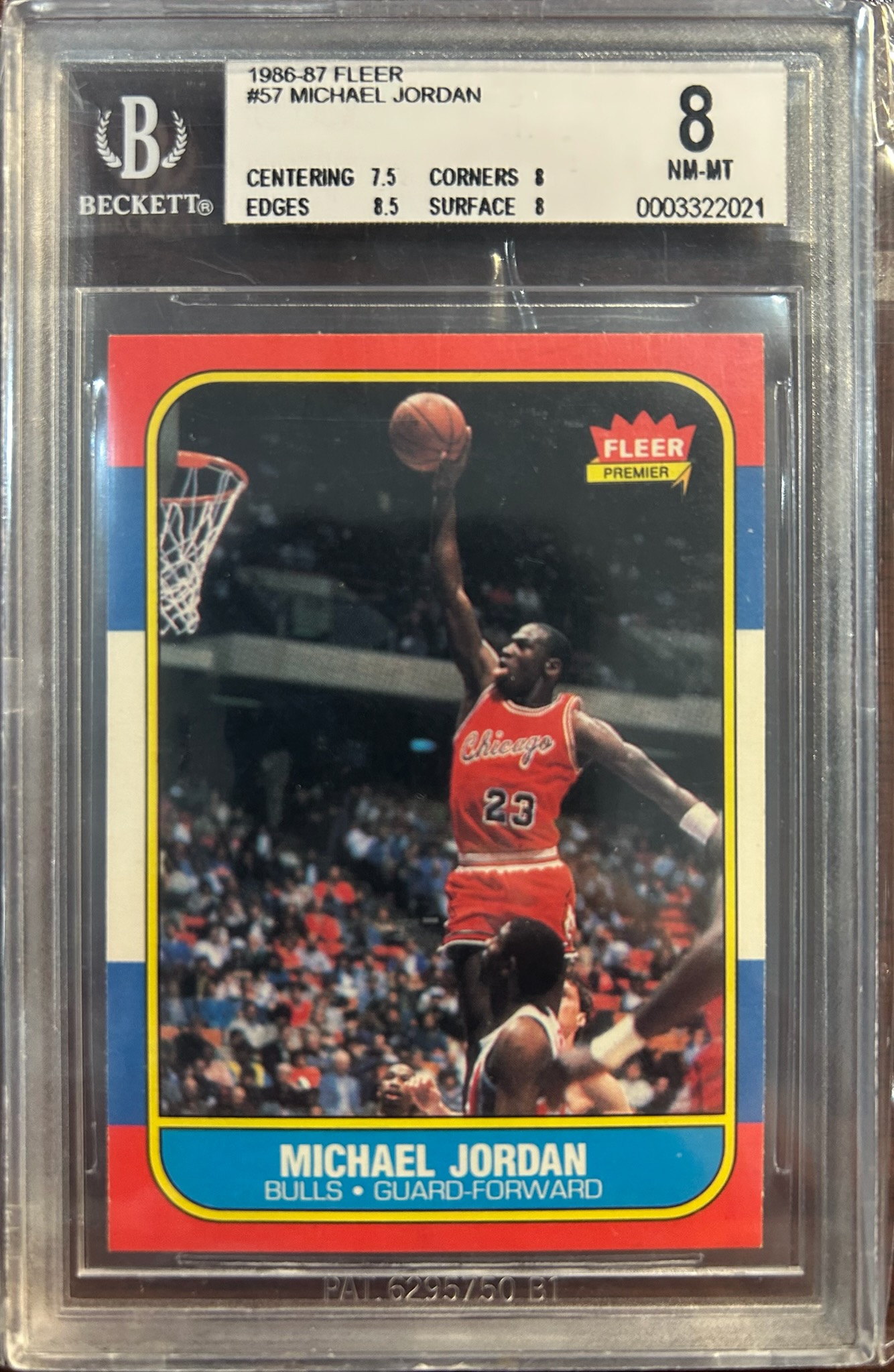
The first example here should be none other than a “rookie” Michael Jordan card. One of the most recognized grails in the hobby is the 1986 Fleer #57 Michael Jordan. As of July-2026, the red Fleer 1986 #57 rookie of Jordan had 50,326 graded examples in all grades when adding up PSA, BGS and SGC. Then there is also the 1986 Fleer #8 stickers Jordan with a combined 34,922 graded copies at that time. These cares are definitely expensive but they just aren’t “scarce” by any measure.
Then there is “the other” rookie Jordan. The combined total graded population for the prized 1984 Star Michael Jordan #101 across PSA, SGC, and Beckett was 1,994 cards on last look. That is based on 707 from PSA and 1,281 graded by Beckett.
It is almost weekly that there are recorded sales of the PSA 9 and PSA 10 highest graded examples of Jordan’s 1986 Fleer card. These highest graded examples are true grails for high-end collectors (or “investors”) but even these prices have periods where they have come down as tracked by the recent sales history with weekly sales records. As of mid-October 2026, the prices of the prized PSA 10 look lower than they were at the peak this summer. Ditto for the PSA 9.
The sales of the 1984 Star Jordan #101 are still not uncommon in all grades, although some grades may go weeks or even months without true “comps” in the same exact grades on these cards.
Whether you consider a population of nearly 2,000 cards as scarce or not is up to you, but on a relative basis the 1984 Star Jordan #101 is only about 4% of the graded population of the 1986 Fleer Jordan #57. This matters in using “comps” considering the frequency of sales for the Fleer rookie versus the relative infrequency for the Star rookie.
And if you get into modern grails, the 1-of-1 or other scarce parallels may be available one time and one time only. Ditto for cards that are not scarce in total populations but may be extremely limited in the highest graded examples. Cards in that category may never come up for sale for years — or ever!
THE REPLACEMENT FACTOR
Another conundrum for buyers and sellers alike, and certainly for dealers who buy cards to sell them for more, is this — there are “comps” but then there is the replacement cost to consider. The hobby has entered into an even more transparent period where public sale prices and populations are known. It may take cross referencing multiple sources because data isn’t always tracked or picked up. The reality is that the buyer or seller that has the most information is usually the one who knows whether or not they are getting the best “deal” to be had.
If a dealer wants to keep their inventory rotating in and out, particularly in the same or similar cards, they have to consider whether or not they can replace a card. You may not be able to replace a true 1-of-1 or 1-of-5, but it may also be able to replace other examples of the same/similar card. And that dealer may or may not even be able to replace the same card in the same grade.
There is also the auction house route to consider. Buyers and sellers alike have to consider what is happening with sales and purchases and the frequency of transactions spread across eBay, Fanatics, Heritage, Goldin, Alt, Mile High, REA and the many other auction houses out there (sorry if yours wasn’t mentioned by name).
There are countless numbers of sales that may occur in auctions and there are fixed price sales that have to be considered. Buyers and sellers alike may prefer to use auction prices, but if a fixed-price transaction actually took place at that price (and it’s provable) then these prices have to be considered.
All of this ties into replacement costs. Think about this for a moment: If a sticker price is $2,500 and an offer comes in at $2,250, how willing is an active seller going to be (regardless of their own purchase price) if they want to replace the same card and they know they will have to pay $2,400 or $2,700 based on the available cards that they know of or are confident they can find?
This is where “comps” run into the replacement cost factor. It is a true dilemma, particularly when pricing cards with low total populations and cards that do not come out that frequently.
REALITY CHECK
Hopefully we have all figured out that prices do not only go upward every day, week, month and year. If the stock market, price of Bitcoin/gold/silver and even the real estate market haven’t offered a historical reference that prices of even scarce and grail cards can also drop, then nothing else will prove ever the point.
The reality is that scarcity and replacement costs are significant factors in evaluating “comps” for even the most sophisticated or wealthy buyers.
There is also the “rogue” sales that occur. Some public or private sales may occur at much lower prices or much higher prices versus “comps.” That may seem more true at conventions and in private transactions, but the card market may truly never be able to know what the motivation was for a buyer to pay way up or for a seller to unload a card at much lower prices.
Here are some things to consider…
Did a seller need to sell, even if it was far less than “comps” may appear? Sometimes we all need to raise money to pay bills or to make other purchases. Even wealthy people run into periods where they suddenly need cash and anything sellable is fair game to raise capital.
Did a buyer just want the card so bad that even paying 20% (or more) over the last sale no matter how recently the sale took place just doesn’t matter? This happens. Just ask set builders or those building a run of a certain player or theme. And just ask those who are in the hunt for building a collection of grails.
Was a seller just spooked or wanting to lock in? This frequently happens after large price increases have been seen or after large price drops. Maybe they are worried about the broader economy or maybe they have an offer that seems too good to be true. Some cards may have also been held for years in collections and the seller is ready to move on.
Did a current auction just make “comps” irrelevant? There are times when a card hasn’t sold yet but the bids from interested buyers are already higher than the last sale or recent sales. An informed seller is not going to sell for old prices if the interested buyers already drove up the price. The inverse may be true for auctions that have not ended but have a very small pool of bidders or watchers. In that case, a buyer may not care what the prior prices were and may just wait it out.
What about “eye appeal” in the mix? We all know that the same grade on the same exact card can look quite different. Let’s take a PSA 3 or SGC example against their exact grades of the same card. If the last three sales were of cards that are not centered or have rounded corners, the next sale with a better presentation is likely to fetch more. Generally speaking, well-centered cards sell better than off center cards. Ditto for no wrinkles versus wrinkles, and ditto for crisp and clear image cards versus faded/dirty cards or those with blurry images. In these cases, the better-looking PSA 3 or SGC 3 copies are not exactly “comps” versus lesser quality appearances of the same card in the same grade. It’s common sense to most, but that doesn’t mean a buyer or sell might not try to just use each grade as all-things-equal to their advantage.
Did a card go to the wrong auction venue to be sold? Most auction houses will tell sellers they get the best prices or have the best audience of buyers for their items. The reality is that some auction houses are better destinations than others for certain types of cards or for specific cards. And it’s also possible that the pool of buyers who wanted a specific card at a prior time no longer need (or want) the same card for their collection.
Did a transaction take place at a strange time? Auction houses usually have fine-tuned when they want to sell cards for consignors. Certain eBay sellers may list a card for sale in the morning or at odd hours in the night. Buyers and sellers alike cannot be present every hour of every day, or they may simply miss that a card was even available. As a general rule, cards that have an auction ending on Friday, Saturday or Sunday in the evening will sell for a better price or have more bidders than an auction ending at 8:30 a.m. on a Tuesday or Wednesday.
Did a seller misprice their card? Not every seller is a sophisticated seller. There are some times that a seller lists a card that they simply did not know the true value of the card. Sometimes those items are listed as Buy-It-Now or “Best Offer” and the buyer of that card just scored on a huge discount to recent sales.
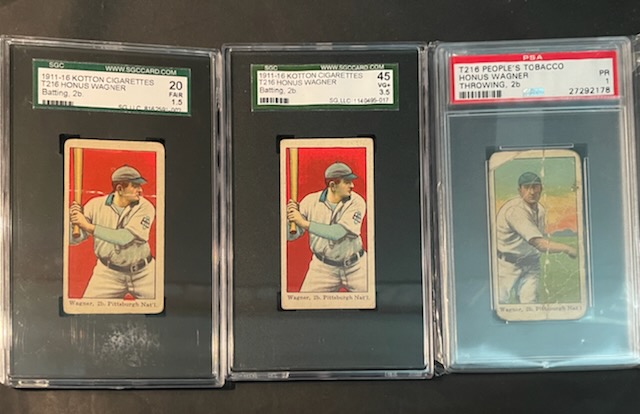
Are there any other examples of the same cards out there (in any grade) that can be bought ever or any time soon? Sometimes there is high-demand and very low supply. Just ask about 1940 Superman #1 in any grade, those chasing Honus Wagner cards, 1935 National Chicle Bronko Nagurski, rare tobacco cards, and particular cards from the 1880s and 1890s. The reality is that there may not be any known supply, or at least not any time soon.
This article may have skipped over many other factors that buyers and sellers have to consider. Buying (or selling) ahead of certain events, many more instance of eye appeal, and many other factors may drive buyers and sellers in different directions. It also skipped over whether or not a card’s grade is new or in old slabs using older grading standards. And it certainly skips over graded cards by companies that are no longer around or not as prevalent as the top grading companies.
In the end, “comps” do matter to a certain extent. Comps just should never be considered the “end all, be all” line in the hobby.
